Network & satellitesPress reportsIndependent, not affiliated with SpaceX
Starship carries its first Starlink V3 satellites to orbit
On 2026-09-28 Starship reached orbit for the first time and deployed Starlink V3 satellites, each said to add about 1 Tbps. What it may mean for rural capacity.
- Announced or first reported
- Effective
- Published
- Last updated
What changed
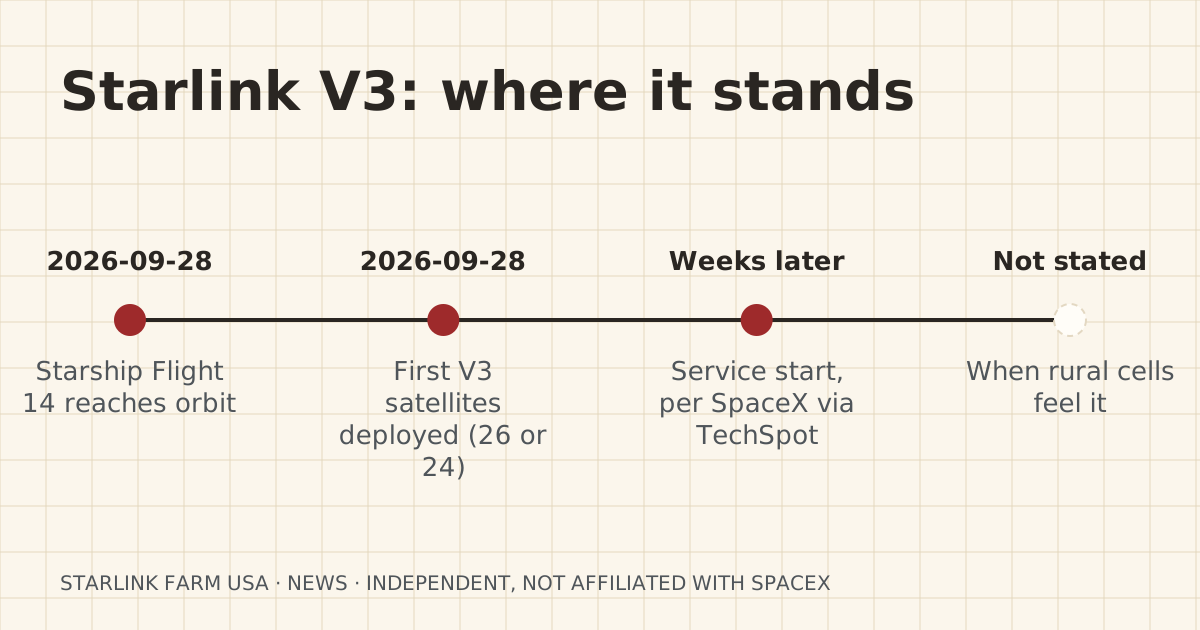
SpaceX’s Starship reached orbit for the first time on its 14th flight, on 2026-09-28, and deployed Starlink V3 satellites. TechSpot and Mobile Internet Resource Center report 26 satellites. SatelliteInternet.com reported 24, so the count differs between outlets. TechSpot reports each V3 satellite adds about 1 terabit per second of capacity, about 10 times the older satellites, and says SpaceX indicated they could begin service within weeks.
Starlink’s July 2025 network update said each V3 satellite is designed for more than 1 Tbps of downlink and more than 200 Gbps of uplink, “more than 10 times the downlink and 24 times the uplink capacity” of the second-generation satellites. Its updates page describes V3 as a design with “meaningful increases in capacity, data density and power generation” that will let it “serve millions more customers.”
| Item | Before | After | Source date |
|---|---|---|---|
| Starlink satellites launched on Starship | None (Falcon 9 only) | First V3 batch, Flight 14 | 2026-09-28 |
| Capacity per satellite (reported) | V2 Mini | About 1 Tbps, roughly 10x | 2026-09-29 |
Who it affects
Nobody’s service changes on launch day. Over time, more capacity matters most where Starlink is busy. In some areas Starlink limits new Residential sign-ups or charges extra to join. If your county is one of them, added capacity is the thing that could change that.
For a farm already on Starlink, more capacity in your cell would mean steadier evening speeds. That helps camera uploads, which add up when several cameras push video at once.
What it means for your setup
No recipe on this site changes. Getting the signal from the house to the barn is the same job whatever the satellites do. Capacity does affect how many cloud cameras one connection can comfortably upload from. If you’re near the limit today, plan for the upload you have, not the upload you might get.
For land buyers, a parcel’s Starlink situation can change faster than its fiber situation. The land test guide already says to check availability on the day, not from an old screenshot.
What to do now
- Nothing to change in your setup.
- If you’re waiting on capacity in your area, check availability at your address on starlink.com from time to time. We don’t track that here.
- Size camera uploads to today’s measured upload speed. Run a speed test in the evening, when the network is busiest.
What stays the same
- Dishes, routers and plans. Nothing changes for customers from this launch alone.
- All distance recipes, camera methods and the land test.
What we don’t know yet
- When V3 satellites start carrying customer traffic, and where first.
- The exact number deployed: reports say 26 or 24.
- How fast SpaceX can repeat the flight. Plans for weekly launches in 2027 are an aim, not a schedule.
Sources
- SpaceX’s Starship finally reaches orbit and puts 26 Starlink satellites into space, TechSpot. Source date: 2026-09-29. Secondary. Retrieved 2026-10-06.
- Starship Kicks-Off Next-Generation Starlink, SatelliteInternet.com. Source date: 2026-10-01. Secondary. Retrieved 2026-10-06.
- In a Dramatic Mission - SpaceX’s Starship Delivers First 26 Starlink V3 Satellites to Orbit, Mobile Internet Resource Center. Source date: 2026-09-29. Secondary. Retrieved 2026-10-06.
- Starlink network update, Starlink. Source date: 2025-07-14. Primary. Retrieved 2026-10-06.
“Each one of these new satellites is designed to provide over a terabit per second of downlink capacity”
- Starlink Updates: Starlink Version 3 Satellites, Starlink. Source date: undated entry, read 2026-10-06. Primary. Retrieved 2026-10-06.
Corrections
No corrections since publication. Spotted an error? Tell us.