Programs, FCC & providersPress reportsBackgroundIndependent, not affiliated with SpaceX
FCC adds foreign-made drones and drone parts to its Covered List; drones already approved stay legal
On 2025-12-22 the FCC put new foreign-made drones and key parts on its Covered List. Drones already approved can still be sold and flown. What farms with ag drones should know.
- Announced or first reported
- Effective
- Published
- Last updated
What changed
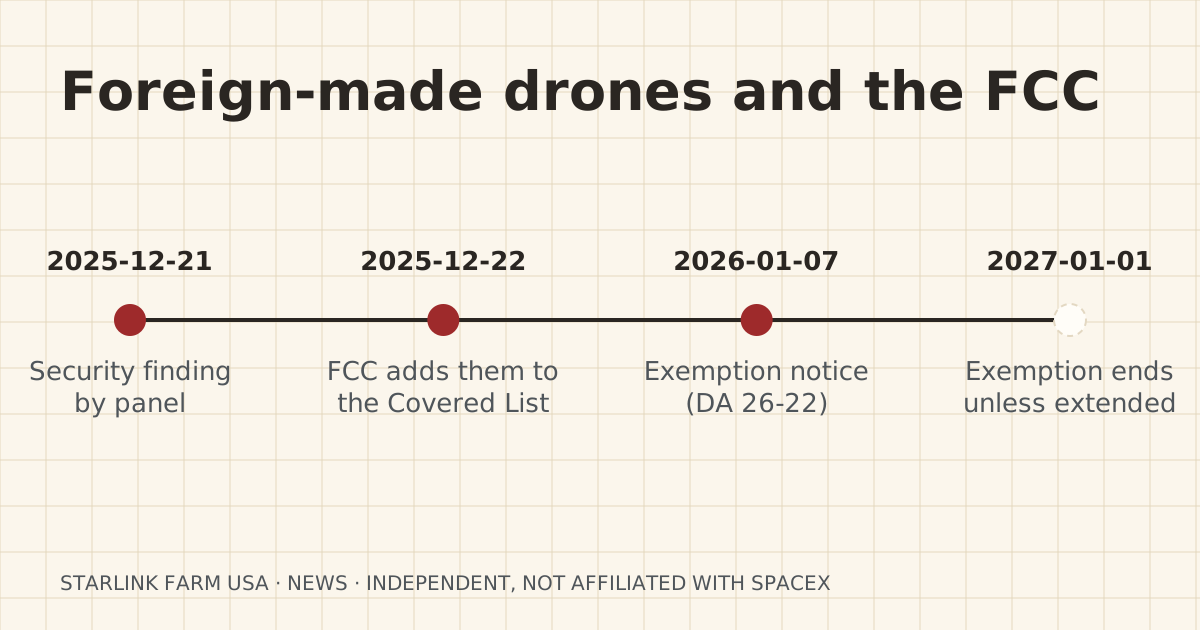
On 2025-12-22 the FCC added foreign-produced drones and some critical drone parts to its Covered List, following a national security finding by an executive-branch panel. Being on the list means the FCC won’t approve new models. CyberInsider reported on 2025-12-24 that the move “targets new drone models going forward but does not affect existing consumer devices.”
DroneDeploy quotes the FCC’s fact sheet: the decision “does not impact a consumer’s ability to continue using drones they previously purchased or acquired.” Retailers can keep selling models approved before. DroneDeploy adds that a 2026-01-07 FCC notice (DA 26-22) exempted Blue UAS and qualifying US-made drones through 2027-01-01 and set up a waiver process. We could not reach fcc.gov to read the order ourselves.
| Item | Before | After | Source date |
|---|---|---|---|
| FCC approval of new foreign-made drone models | Allowed | Barred (Covered List), with waiver paths | 2025-12-22 |
| Drones already approved | Legal to sell, buy and fly | Still legal | 2025-12-22 |
| Blue UAS and qualifying US-made drones | n/a | Exempt through 2027-01-01 (FCC notice of 2026-01-07, per DroneDeploy) | 2026-01-07 |
Who it affects
Farms and ranches that use drones for scouting, spraying, mapping or checking stock and fences, most of which are foreign-made. Also farm networks: drones often hand video to a laptop or phone over Wi-Fi at the field edge.
What it means for your setup
Nothing you own is grounded. The change hits future models: newer generations of foreign drones may not reach the US without a waiver. For planning, it’s a parts-and-replacement question, like any gear with an uncertain supply.
On the network side, nothing changes. If you upload drone maps from the field, the bottleneck is still the link back to the house. A bridge to the machine shed, or carrying the card back, beats uploading big map files over a Roam plan. Our metal buildings guide covers getting Wi-Fi inside the shed where drones charge.
Where networks come in: many farm drones pair with a phone or tablet over Wi-Fi at the field edge, then upload maps or video when they get back to a building with internet. Large mapping jobs can run to many gigabytes. If those uploads go over a capped Roam plan, they can use a month’s data in one job. A wired or bridged link to the machine shed, with an access point inside, keeps the upload on your home connection. The Covered List action doesn’t change that advice; it only makes it more likely the drone you fly today will be the one you fly for a while.
What to do now
- Keep flying what you have. It stays legal, per the FCC fact sheet as quoted.
- If you rely on one drone model, ask your dealer about spare batteries and parts while models already approved are still sold.
- Before buying a new model, ask the seller whether it has FCC approval.
What stays the same
- Using, buying and selling drone models the FCC approved before 2025-12-22.
- FAA rules for flying, which this FCC action doesn’t touch.
What we don’t know yet
- How many waivers the FCC will grant and how fast.
- What happens to the exemption after 2027-01-01.
Sources
- US bans foreign-made consumer drone products over security concerns, CyberInsider. Source date: 2025-12-24. Secondary. Retrieved 2026-10-06.
- Foreign drones and the FCC Covered List: a fact-based guide for compliance teams, DroneDeploy. Source date: 2025-12-23, updated January 2026. Secondary. Retrieved 2026-10-06.
“This is not a retroactive ban. Existing authorized hardware remains legal to purchase, own, and fly.”
Corrections
No corrections since publication. Spotted an error? Tell us.