Network & satellitesPrimary sourceBackgroundIndependent, not affiliated with SpaceX
Starlink reports US median peak-hour download near 200 Mbps and latency of 25.7 ms
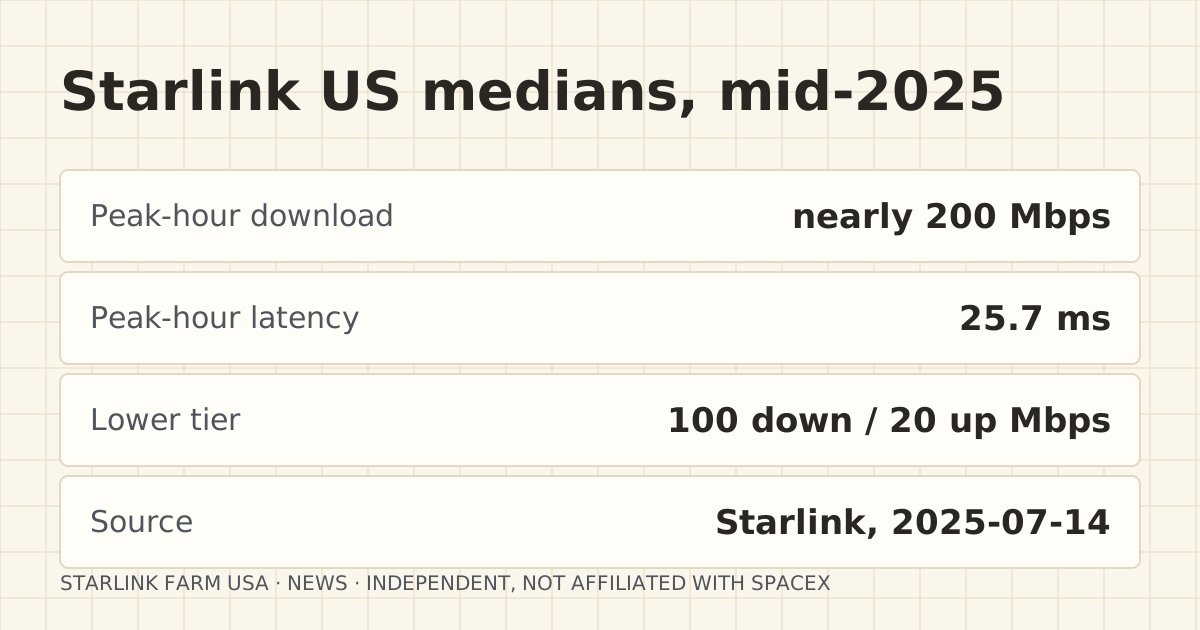
Starlink’s 2025-07-14 network update gave US peak-hour medians: nearly 200 Mbps down and 25.7 ms latency, and 100/20 Mbps on its lower tier. Background for camera planning.
- Announced or first reported
- Effective
- Published
- Last updated
What changed
Starlink’s “Starlink network update” of 2025-07-14 says that in the US, “the median download speed across more than 2 million active Starlink customers during times of peak demand is nearly 200 Mbps as of July 2025.” It put median peak-hour latency at 25.7 ms as of June 2025, with fewer than 1% of measurements over 55 ms.
It also says Starlink’s lower speed tier serves “100 Mbps download and 20 Mbps upload speeds in most states and territories.” Its March 2024 update had put US peak-hour median latency at 33 ms.
| Item | Before | After | Source date |
|---|---|---|---|
| US median peak-hour download | not stated | Nearly 200 Mbps (July 2025) | 2025-07-14 |
| US median peak-hour latency | 33 ms (March 2024 update) | 25.7 ms (June 2025) | 2025-07-14 |
| Lower speed tier | n/a | 100 Mbps down / 20 Mbps up in most states | 2025-07-14 |
Who it affects
Anyone planning how much a Starlink connection can carry across a farm: cameras, a second house, a shop computer. These are Starlink’s own medians. Your spot can be better or worse.
What it means for your setup
Upload is the number that limits cameras, and a median download figure says little about it. The one upload figure in the update is 20 Mbps on the lower tier. With our camera upload table, 20 Mbps covers a few HD cloud cameras with room for normal use. Several 4K cameras would crowd it.
Latency near 25 ms makes remote viewing and remote help feel responsive. Our remote help guide relies on that for screen-sharing with a parent.
This is a 2025 snapshot, so it carries the Background badge. Starlink’s speeds change as it adds satellites and customers.
The same update said Starlink was adding more than 5 Tbps of capacity a week with its second-generation satellites, and was launching extra satellites into polar orbits that it said had nearly doubled median peak-hour download in Alaska in the month before. It also listed more than 100 US gateway sites. For rural readers, the takeaway is that Starlink’s speeds depend on how busy your area is, and Starlink publishes national medians, not county ones.
What to do now
- Measure your own upload at the busiest hour, usually evening, before adding cameras.
- If upload is tight, set cameras to upload on motion rather than all the time.
What stays the same
- CGNAT on standard plans.
- All distance recipes. The barn link carries far more than the satellite link.
What we don’t know yet
- Upload medians across all US customers. The update gives only the lower-tier figure.
- Medians for rural areas alone, which may differ.
Sources
- Starlink network update, Starlink. Source date: 2025-07-14. Primary. Retrieved 2026-10-06.
“As of June 2025, Starlink is delivering median peak-hour latency of 25.7 milliseconds (ms) across all customers in the United States.”
- Starlink Updates (index, with the March 2024 latency entry), Starlink. Source date: read 2026-10-06. Primary. Retrieved 2026-10-06.
Corrections
No corrections since publication. Spotted an error? Tell us.